
Patients’ Aid Foundation Established Thalassemia Department at JPMC
A Safety Haven For Thalassemia Patients
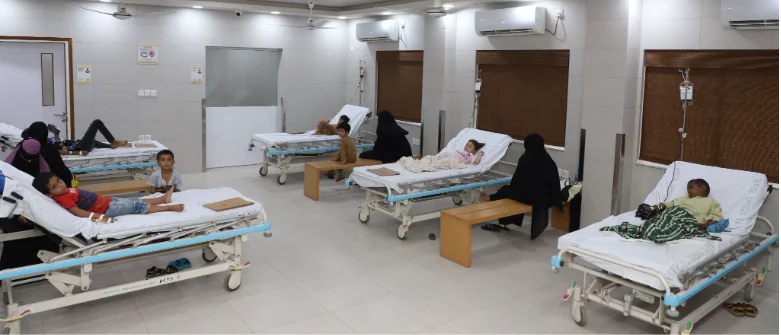
Imagine living with thalassemia without even knowing it, slowly discovering it only when your body begins to fail, while access to treatment and resources is already out of reach. That is the harsh reality for many in Pakistan.
Thalassemia is one of the most common inherited blood disorders in Pakistan, placing a long-term clinical and emotional burden on families and the healthcare system. Around 100,000 patients are registered nationwide, while an estimated 5,000 to 9,000 children are born each year with thalassemia major, requiring lifelong blood transfusions and care.
Carrier rates are estimated at 5% to 7%, which means nearly 13 to 18 million Pakistanis may carry the gene, many of whom are unaware until a child is affected. (Source: Fatimid Foundation; Al Jazeera, 2025)
Beyond statistics, this condition affects families across the country, where survival depends on continuous access to blood, hospital support, and financial stability, making it an ongoing struggle after diagnosis.
Patients’ Aid and the Expanding Medical Care Network at JPMC

Patients’ Aid Foundation operates without discrimination, serving patients based on need rather than background, status, or financial capacity. Built for people who often have nowhere else to turn, the organization strengthens public healthcare systems by supporting high-volume hospitals where demand continuously exceeds capacity.
At JPMC, Patients’ Aid Foundation has significantly strengthened critical care services by expanding units like Stroke, Dialysis, ICU, CyberKnife, and Radiation Oncology, ensuring timely treatment for critically ill patients. Alongside advanced diagnostics, upgraded facilities, and increased medical staff, these improvements primarily benefit low-income patients who rely on free treatment at JPMC as their only option.
Learn more about all ongoing healthcare programs at JPMC in the annual report (2024-2025) of the Patients’ Aid Foundation. Watch Thalassemia Patient Story: https://www.instagram.com/p/DX_JKFYTOxw/
https://www.instagram.com/p/DXOnz42DA5U/

Thalassemia a Disease That Quietly Alters Lifespan
Thalassemia is a genetic blood disorder that reduces the body’s ability to produce healthy hemoglobin, leading to chronic anemia, fatigue, organ stress, and in severe cases, early mortality if untreated.
Pakistan lies within the broader thalassemia belt, a high-prevalence corridor across South Asia and parts of the Mediterranean. In this setting, children remain the most affected group, especially in communities where genetic overlap within families increases transmission risk. The impact is more visible in underserved districts across Karachi, interior Sindh, rural Punjab, and remote regions of Balochistan and Khyber Pakhtunkhwa, where early testing and specialist consultation are often not easily accessible.
Diagnosis in many families arrives late, usually after repeated hospital visits when symptoms have already intensified. This delay is driven by a combination of structural and social realities, including:
- Low premarital screening rates across large segments of the population
- Limited access to genetic counseling and carrier testing services
- Socio-cultural marriage patterns that increase carrier-to-carrier transmission
These factors together allow the condition to remain undetected until it presents in its more severe form, placing sudden and long-term pressure on families already navigating limited healthcare resources.
Thalassemia is critical, the treatment requires lifelong blood transfusions, iron chelation therapy, and regular monitoring. Without consistent care, complications such as heart failure and organ damage become common.
Treatment Reality and Cost Burden in Pakistan Private Sector
In private hospitals across Pakistan, the management of thalassemia can become financially overwhelming for families.
Estimated Monthly Treatment Cost Comparison
| Treatment Component | Public Hospitals (JPMC) | Private Hospitals |
| Blood Transfusion | Free | Starting from PKR 1,000-3,000 per session |
| Iron Chelation | Subsidized / Free | PKR 20,000 – 60,000 monthly |
| Diagnostics | Free | PKR 10,000+ monthly |
| ICU Support | Free at JPMC | PKR 50,000+ per day |
When Survival Depends on Geography and Income
With rising treatment costs, a difficult question emerges: where do financially unstable patients go when illness demands continuous medical care? The answer lies in overcrowded public hospitals where hope often arrives before certainty.
These patients come from Karachi, interior Sindh, Punjab, Balochistan, KPK, and beyond. These are not just regions on a map; they represent families who quietly carry the weight of untreated conditions while waiting in long hospital queues. Many belong to the ‘Safaid-posh’ category, who do not qualify for luxury healthcare yet cannot afford private treatment.
Consider supporting public hospital systems like Jinnah Hospital supported by Patients’ Aid with generous donations so no patient is left untreated due to financial limitations.
Heatwaves Are Increasing Risks for Thalassemia Patients
During periods of extreme heat in Pakistan, thalassemia patients face additional health risks due to chronic anemia and physical weakness. High heat and high temperature conditions can increase dehydration, fatigue, dizziness, and stress on the heart and vital organs.
For patients traveling long distances for blood transfusions, especially during peak heat time, the journey becomes more physically exhausting and financially difficult. Many low-income families also lack access to cooling systems, clean water, and stable electricity, making recovery harder during extreme heat conditions.
Heatwaves also affect blood donation activity, as fewer people travel outdoors during severe heat. This creates additional pressure on public hospital blood banks that support transfusion-dependent patients throughout Pakistan.
Prevention Screening and Blood Donation as the First Line of Defense
Thalassemia prevention depends heavily on early screening, genetic counseling, and responsible family planning. Public awareness remains the strongest tool in reducing new cases.
Blood donation plays a critical role in sustaining existing patients. At JPMC Blood Bank, thousands of transfusions are facilitated each month through voluntary donors. According to institutional records, approximately 54,384 individuals donated blood during 2024–2025, significantly supporting thalassemia and trauma patients.
Become a voluntary blood donor to strengthen life-saving transfusion systems at JPMC. Visit Patients’ Aid to learn more.
JPMC Blood Bank and Lifeline Support for Thalassemia Patients
Jinnah Postgraduate Medical Centre (JPMC) stands as one of the largest public healthcare institutions in Pakistan, receiving thousands of patients daily who arrive with limited resources and urgent medical needs. It remains a critical access point for Free healthcare services in Karachi, especially for chronic conditions like thalassemia.
Patients’ Aid Foundation has actively strengthened the JPMC blood bank infrastructure, ensuring smoother donation systems and improved storage and screening capabilities. This development has allowed a higher volume of safe transfusions for dependent patients.
Support JPMC blood bank development initiatives through donations to Patients’ Aid Foundation.
Verified Impact and Long Term Healthcare Commitment
Patients’ Aid is an NGO, certified by the Pakistan Centre for Philanthropy (PCP) and Al-Hamd Shariah Service, and has been delivering structured healthcare support for more than three decades.
On August 25, 2024, Patients’ Aid Foundation, in collaboration with Faysal Bank, organized the campaign “Bike a Cause for Thalassemia Patients”. The initiative aimed to raise awareness and funds for children and adults requiring regular blood transfusions.
These campaigns are not symbolic events. They directly support ongoing treatment cycles and hospital resource expansion, ensuring that care does not stop at the hospital gate. Consider participating in future awareness campaigns to keep thalassemia care continuously funded and visible.
This fundraising creates an impact that is not limited to infrastructure but also extends into emotional relief for families who walk into hospitals carrying uncertainty and leave with treatment options they can actually access.
We Have A Vision, But System Depends on Collective Responsibility
Healthcare for diseases like thalassemia cannot survive on institutional effort alone. It requires continuous public participation, financial contributions, and awareness sharing. Every donation to the Patients’ Aid Foundation directly supports blood transfusions, emergency care, and treatment continuity for patients who depend entirely on public hospitals like JPMC Karachi.
In a country where thousands of families silently navigate chronic illness without financial stability, charity is not an occasional gesture. It is the operational backbone of survival for many children who depend on regular transfusions to live another month, another year, another chance.
Donate to Patients’ Aid and support Free healthcare at JPMC. Your contribution directly sustains blood transfusions, critical care, and lifelong treatment for thalassemia patients who cannot afford to wait.
