
Mushtaq Chhapra and the Evolution of Public Welfare Infrastructure in Pakistan
What are the basic rights that every society promises but does not always deliver in practice?
- Clean education.
- Timely healthcare.
- Safe environments for growth.
- Dignity in moments of vulnerability.
In Pakistan, a large portion of the population still navigates life without consistent access to these foundations, not because they are unknown, but because they remain unevenly distributed. Organizations like Patients’ Aid Foundation have played a critical role in addressing these gaps, particularly in public healthcare systems where access and affordability remain ongoing challenges.
Among these, education and healthcare carry a heavier weight than most realize. They are not only individual needs. They determine how a nation functions over time. A population that cannot learn effectively or receive timely healthcare support during illness does not just struggle privately, it limits collective progress across generations.
Who is Mushtaq Chhapra?
Mushtaq Chhapra is a Pakistani industrialist and philanthropist best known for co-founding The Citizens Foundation (TCF), one of the country’s largest and most impactful non-profit organizations dedicated to education for underprivileged children.
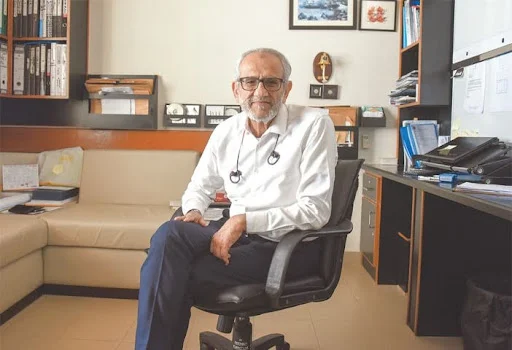
Before his philanthropic work became widely recognized, he built his career in industry and business, serving on the boards of companies such as CBM Plastics (Pvt.) Ltd., Transpak (Pvt.) Ltd., and Coastal Converters (Pvt.) Ltd., where he developed experience in enterprise management and manufacturing.
However, his lasting legacy is defined not by industry alone but by a profound shift in purpose, toward addressing educational and healthcare inequality in Pakistan. Through TCF and Patients’ Aid Foundation, he helped create a network of schools and improved healthcare infrastructure at JPMC that opened doors for hundreds of thousands of children and elderly who otherwise had limited or no access to these basic rights.
His journey reflects a powerful transformation from industrial leadership to social impact, driven by the belief that healthcare and education can reshape lives and communities across generations.
A Mindset Formed Around What Systems Leave Behind
Mushtaq Chhapra did not begin his journey with a single institution in mind. His direction developed gradually through observation of gaps that repeated themselves across different spaces. He saw families navigating illness without stability. He saw children outside formal education systems with no clear entry point. He saw public institutions carrying responsibilities far larger than their available support.
Instead of treating these as separate problems, he viewed them as connected failures of structure in Pakistan. That understanding shaped everything he would later contribute.
Where most people learned to accept inequality as a permanent condition, Mushtaq Chhapra kept noticing what others stopped seeing. In Karachi, around institutions like JPMC, he observed systems stretched beyond their limits and individuals slipping through gaps that had quietly become normal.
He did not respond with speeches or symbolic gestures. His work moved in a different direction altogether, toward building support structures where none existed, and strengthening places already under pressure. Over time, his efforts formed a network of institutions that still carry public needs today.
Early Years and the Weight of Observation
Mushtaq Chhapra’s early life shaped a particular sensitivity toward community struggles. He did not approach society from distance. He remained close enough to see how ordinary families navigated illness, education barriers, and financial instability at the same time.
In Karachi, this reality was not rare. It was routine. Hospitals were crowded. Schools were out of reach for many. Basic services often depended on circumstance rather than fairness.
Instead of treating this as background noise, he treated it as a responsibility that required structure, not sympathy alone.
1985 Building Something Where There Was Only Need
In 1985, he became part of an early initiative that later developed into The Kidney Centre. At that time, individuals facing long-term illness often had limited options, especially when resources were scarce.
His involvement reflected a simple but difficult idea: care should not collapse because of financial limitation. The institution grew around this principle, focusing on continuity and access for people who otherwise had no stable pathway forward.
What mattered was not the visibility of the effort, but the fact that it created a place where uncertainty was reduced.
1991 Patients Aid Foundation at JPMC Karachi A System Inside a System

In 1991, Mushtaq Chhapra founded the ‘Patients Aid Foundation’ at JPMC, Karachi, marking a defining shift in his life’s direction.
Instead of creating isolated projects, he began focusing on strengthening existing public institutions from within. JPMC was already serving thousands daily, but like many public systems, it struggled with resources, coordination, and scale.
The Patients’ Aid became a support structure embedded within this environment. It worked quietly in the background, improving infrastructure, supporting operations, collecting donations, and helping reduce the strain on patients and staff alike.
He continues to serve as Chairman of its Board of Governors, guiding its development with a long-term view rather than short-term response.
1995 Education as a Form of Social Repair
In 1995, Mushtaq Chhapra co-founded ‘The Citizens Foundation’ (TCF), beginning with a small number of schools in Karachi.
The intention was not to create an institution that competed with existing systems, but to reach children who were completely outside formal education. TCF started with 5 schools in Karachi but over time, expanded into one of the largest low cost schooling networks of its kind.
The deeper idea behind this effort was not schooling alone. It was access to possibility. For many children, this became the first structured environment where learning was consistent and predictable.
Key Institutions Connected to His Work
| Year | Initiative | Area of Focus |
| 1985 | Early healthcare initiative, The kidney Centre | Long-term patient support systems |
| 1991 | Patients’ Aid Foundation JPMC | Public healthcare institution strengthening |
| 1995 | The Citizens Foundation | Education access expansion |
| 2021 | IBA Board of Governors | Academic governance |
| 2022 | SMBBIT Board | Institutional development |
| 2024 | NICVD Board | System-level healthcare support |
| 2024 | 1122 Council | Emergency response coordination |
Expanding Responsibility Across National Institutions
Over the years, Mushtaq Chhapra’s involvement extended into multiple governance roles across Pakistan’s institutional landscape.
In 1996, Mushtaq Chhapra was appointed as the consulate general of Nepal. His presence on boards such as IBA, SMBBIT, NICVD, and the 1122 emergency system reflects a consistent pattern. He worked within structures that already served the public, focusing on strengthening their capacity rather than creating parallel visibility.
Each institution represented a different kind of public need, yet his engagement followed the same underlying approach: improve what already exists so it can serve more consistently.
Recognition That Followed Long Term Work
| Year | Award | Context |
| 2010 | WISE Award | Contribution to education related systems |
| 2013 | Skoll Award | Social innovation work |
| 2017 | Sitara e Imtiaz | National recognition for service |

These acknowledgements arrived after years of sustained involvement. They reflected outcomes rather than intentions.
Patients Aid Foundation as an Ongoing Structure at JPMC Karachi
Inside JPMC, Karachi, the Patients’ Aid Foundation continues to function as a quiet but essential support system.
Patients’ Aid’s work is not defined by a single category. It supports infrastructure, operational needs, and patient assistance systems that allow Jinnah Hospital, one of the oldest and largest public hospitals in Pakistan to function under continuous demand.
Patients’ Aid also actively contributes to awareness efforts around public health concerns, including infectious diseases, cancer, and more, helping improve understanding and responses in vulnerable communities.
Over the years, various humanitarian initiatives have been organized to collect donations: such as cycling events, cricket tournaments, and golf tournaments, along with campaigns like ‘Roz Ka Sadaqa’, as well as other partnerships with major corporate organizations. These efforts reflect his continued dedication and commitment to the cause.
The foundation’s presence ensures that gaps in resources do not immediately become gaps in access.
A Life Defined by Attention to What Others Normalized
Mushtaq Chhapra’s story is not built around sudden moments or dramatic shifts. It is built around sustained attention to problems that often become invisible through repetition.
He did not operate from a distance. He stayed close to systems under pressure, working within them, adjusting them, and reinforcing them where needed.
Across Karachi, and particularly within institutions like JPMC, the outcomes of this approach are still visible in the form of systems that continue to function under strain.
Not all heroes wear capes
Mr. Mushtaq Chhapra stands as a quiet hero for countless patients and students who once saw their dreams of education and healthcare fade under the weight of financial hardship and limited access. Through his vision and lifelong commitment, he has worked to restore hope where it was once lost, proving that compassion paired with purpose can reshape entire lives. His journey reflects the belief that passion for a cause should never diminish with time; instead, it should deepen and expand.
A man with a clear vision and dedication can challenge limitations and create lasting change that extends far beyond his own lifetime.
There is a kind of work that does not announce itself. It does not depend on recognition in the moment, nor does it seek applause while it is being done. Instead, it reveals its value over time, through systems that continue to function, institutions that continue to serve, and opportunities that continue to reach those who were once excluded. Mushtaq Chhapra’s legacy belongs to this quiet but powerful category. It lives in the structures that still support education and healthcare access, and in the silent continuity of impact that remains long after the effort itself is unseen.
Thank you, Mr. Mushtaq Chhapra, for your lifelong dedication to education and healthcare that has transformed countless lives. Your vision and service continue to inspire hope and lasting change in underserved communities.
