
Patients’ Aid JPMC supports lifelong brain health for the underprivileged
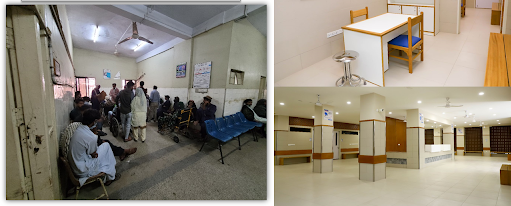
Old Neurology Department at JPMC Patients’ Aid Revamped Neurology
Every year on July 22, the world unites for World Brain Day, a global effort to raise awareness about brain health across all ages and communities. This day reminds us of the importance of early recognition, treatment, and prevention of neurological disorders. It sparks conversations, breaks stigma, and makes brain health a priority in public discourse. By educating people and empowering healthcare professionals with the latest knowledge, it pushes for better access to care and inclusive advocacy.
In Pakistan, the Patients’ Aid Foundation stands at the forefront of awareness and healthcare advocacy missions. As a healthcare NGO active at Jinnah Postgraduate Medical Centre (JPMC), it recognizes the challenges faced by individuals from all walks of life and ensures medical care, especially quality brain care, is accessible regardless of age, gender, nationality, or financial background. From life-saving treatments to community education, Patients’ Aid is committed to making brain health a shared responsibility and a human right.
Understanding brain health in Pakistan
Brain health, as defined by the World Health Organization, refers to the brain’s ability to function effectively across diverse areas, including thinking, sensing, feeling, relating, and moving, so people can realize their full potential throughout their lives, regardless of whether they have a neurological disorder. It goes well beyond merely not having a disease; true brain health includes robust memory, emotional resilience, accurate sensory perception, and coordinated movement.
Despite its importance, Pakistan faces a growing crisis. According to the Dawn, around 20 million people suffer from neurological disorders, twice the number affected by heart disease or cancer. Major challenges include:
| Major health challenges | Key statistics/details |
| Neurology & Stroke Unit | Neurology & Neuro‑Medicine at JPMC is equipped with plasmapheresis, video EEG, and EMG facilities. Supported by Patients’ Aid, in 2023–24, the department managed 54,825 OPD neurology cases, admitted 1,491 patients, performed 936 plasmapheresis procedures, and carried out 2,848 EEG tests.(Source: Patients’ Aid Annual Report 2024) |
| Traumatic Brain Injuries (TBI) | Pakistan has one of the highest TBI rates in South Asia, driven by road accidents, violence, and terrorism. Patients’ Aid established a dedicated Neurotrauma Facility at JPMC to handle complex neurological cases. In 2023–24, the department performed 2,173 surgeries and treated 82,837 new outpatients at JPMC. (Source: Patients’ Aid Annual Report 2024) |
| Mental Health & Cognitive Disorders | Patients’ Aid recognized the urgent need for mental health services in Pakistan and built a state-of-the-art Department of Psychiatry & Behavioural Sciences at JPMC, inaugurated in January 2024, entirely funded by donations. Within its first six months of operation (January–June 2024), the department treated 20,695 patients across various psychiatric services.(Source: Patients’ Aid Annual Report 2024) |
| Brain Tumors & Cancers | The Patients’ Aid Foundation actively contributes to cancer care at JPMC, including free brain tumor treatment. At JPMC, around 32 patients receive daily advanced radiation therapy, combining IMRT and real‑time CT‑guided TomoTherapy, fully funded by the Foundation . In the fiscal year 2023–24, Patients’ Aid treated 50,000 cancer patients at JPMC, and supported advanced therapies such as CyberKnife robotic radiosurgery and TomoTherapy for free.(Source: Patients’ Aid Annual Report 2024) |
CyberKnife and Tomotherapy at JPMC

Patients’ Aid Foundation has revolutionized brain cancer treatment in Pakistan by installing CyberKnife and TomoTherapy (Radixact X9) systems at JPMC. This makes JPMC one of just 10 centres globally with three CyberKnife units and two TomoTherapy systems.
- CyberKnife uses robotic arms and real-time imaging to deliver precise, non-invasive radiation, making it highly effective for both benign and malignant brain tumors. In 2023–24, 463 patients were treated, with 1,836 sessions performed, completely free of cost. These treatments typically range between $50,000 to $90,000 abroad.
- Tomotherapy integrates CT imaging with 360° radiation targeting, delivering slice-by-slice treatment tailored to each patient’s anatomy, with reduced side effects. In 2023–24, approximately 329 cancer patients were treated, and 7,395 TomoTherapy fractions (sessions) were conducted at JPMC.
Patients’ Aid Foundation’s broader contributions
While the situation in Pakistan is challenging, the Patients’ Aid Foundation continues to stand as a symbol of hope for Neurological & Psychiatric patients visiting JPMC by:
- State of the art Neurology, Neurotrauma and Psychiatry & Behavioral Sciences Departments at JPMC
- Raising awareness and fighting stigma around neurological and mental health.
- Trained neurologists, psychiatrists, and neurosurgeons for life saving treatments at JPMC
- Provision of MRI, CT, PET-CT, ultrasound, and dialysis units for timely diagnosis
- Offers free medical care and medications to people coming from Interior Sindh, Balochistan, Punjab, and all across the country seeking quality healthcare at JPMC
These efforts ensure that high-tech treatment isn’t a privilege but a right. Every day Accident & Emergency department at JPMC revamped by Patients’ Aid saves around 2,000 lives, with overall serving 12,000 patients in OPD. Leveraging advanced technologies and relentless dedication, Patients’ Aid Foundation guarantees that life-saving brain and psychological disorder treatments are accessible to everyone, no matter their financial background. These continuous efforts not only bring hope to thousands battling neurological disorders including brain cancer but also set a new benchmark for inclusive, world-class neurological and Psychiatry care in Pakistan.

Success story of Ayjaz Khan from pain to healing
Ayjaz Khan, just 18 years old and the sole breadwinner for his aging parents, had been silently battling severe headaches and vomiting for years. Living in a rented home in Landhi, financial limitations prevented him from seeking the medical help he desperately needed. When his condition became unbearable, he was rushed to Jinnah Postgraduate Medical Centre (JPMC), where scans revealed hydrocephalus caused by a brain cyst, a serious, life-threatening condition.

Thanks to the Patients’ Aid, Ayjaz received a complex brain surgery completely free of cost at JPMC. The skilled surgical team successfully removed the cyst, and his recovery has been remarkable. A follow-up CT scan confirmed he is now tumor-free.
Ayjaz’s story is a powerful reminder of how compassion and access to modern care can truly change lives. You can make it happen, donate now to patients’ aid.
Join Patients’ Aid Foundation to help humanity
Brain health is lifelong, not a one-time fix. With millions affected in Pakistan and continued stigma, awareness, infrastructure, and care are needed. Patients’ Aid is leading the charge, but we can’t do it alone. They need your help to continue making brain health a national healthcare priority.
Your donation, whether through Zakat, Sadqa‑e‑Jariyah, or charity, directly supports awareness, treatments, and compassionate services.

Donate today to Patients’ Aid Foundation, and ensure every mind in Pakistan has the opportunity to thrive. Be part of the movement that turns brain care into a universal right.
